Tuesday, May 3, 2011

Premature Ejaculation Diagnostic Tool (PEDT)

PEDT Questionnaire is the most commonly tool to diagnose premature ejaculation. This tool was developed by Pfizer Inc. It is simple and worldwide approved as a standard to confirm a diagnosis of premature ejaculation in a patient.


This questionnaire to help identify men who may have a problem with ejaculating too soon during sexual activity. Even if you do not have difficulties, please answer all the questions.  Please select the answer that best represented your response for each of the questions below. While your experiences may change from time to time, please report your general experiences with intercourse.


Definition: Ejaculation here refers to ejaculation (release of semen) after penetration (when your penis enters your partner)


Answer the following questions!


Q1. How difficult is it for you to delay ejaculation?

score 0 --> Not Difficult at all
score 1 --> Somewhat Difficult
score 2 --> Moderately Difficult
score 3 --> Very Difficult
score 4 --> Extremely Difficult

Q2. Do you ejaculate before you want to?

score 0 --> Almost never or never 0%
score 1  --> Less than half the time 25%
score 2 --> About half the time 50%
score 3 --> More than half the time 75%
score 4 --> Almost always or always 100%

Q3. Do you ejaculate with very little stimulation?

score 0 --> Almost never or never 0%
score 1  --> Less than half the time 25%
score 2 --> About half the time 50%
score 3 --> More than half the time 75%
score 4 --> Almost always or always 100%

Q4. Do you feel frustrated because of ejaculating before you want to?

score 0 --> Not at all
score 1 --> Slightly
score 2 --> Moderately
score 3 --> Very
score 4 --> Extremely

Q5. How concerned are you that your time to ejaculation leaves your partner sexually unfulfilled?

score 0 --> Not at all
score 1 --> Slightly
score 2 --> Moderately
score 3 --> Very
score 4 --> Extremely

Clinical Interpretation

Total scores can be interpreted as follows:


ScoreInterpretation
0-8A score of 0 to 8 indicates

a low likelihood of premature ejaculation (PE). 
 9-10A score of 9 or 10 indicates

a probable diagnosis of premature ejaculation (PE).
11-20A score of 11 to 20 indicates

a diagnosis of premature ejaculation (PE).


References:

  1. http://www.sexhealthmatters.org/resources/premature-ejaculation-diagnostic-tool

  2. http://www.pehomepage.com/premature_ejaculation_test_pfizer.asp

Premature Ejaculation, Definition, Mechanism, and How to Overcome It

Videos Presented by: Dr Andrew L. Siegel. He is a urological surgeon at Hackensack University Medical Center, and is the director of The Center of Continence Care.


Part 1 of 2


Part 2 of 2


Premature ejaculation (PE) is a condition in which a man ejaculates earlier than he or his partner would like him to. Premature ejaculation is also known as rapid ejaculation, rapid climax, premature climax, or early ejaculation. Masters and Johnson defines PE as the condition in which a man ejaculates before his sex partner achieves orgasm, in more than fifty percent of their sexual encounters. Other sex researchers have defined premature ejaculation as occurring if the man ejaculates within two minutes of penetration; however, a survey by Alfred Kinsey in the 1950s demonstrated that three quarters of men ejaculate within two minutes of penetration in over half of their sexual encounters. Self reported surveys report up to 75% of men ejaculate within 10 minutes of penetration. Today, most sex therapists understand premature ejaculation as occurring when a lack of ejaculatory control interferes with sexual or emotional well-being in one or both partners.


Most men experience premature ejaculation at least once in their lives. PE affects 25%-40% of men in the United States.Because there is great variability in both how long it takes men to ejaculate and how long both partners want sex to last, researchers have begun to form a quantitative definition of premature ejaculation. Current evidence supports an average intravaginal ejaculation latency time of six and a half minutes in 18-30 year olds. If the disorder is defined as an IELT percentile below 2.5, then premature ejaculation could be suggested by an IELT of less than about 2 minutes. Nevertheless, it is well accepted that men with IELTs below 1.5 minutes could be "happy" with their performance and do not report a lack of control and therefore would not be defined as having PE. On the other hand, a man with 2 minutes IELT may have the perception of poor control over his ejaculation, distressed about his condition, has interpersonal difficulties and therefore be diagnosed with PE.


Possible psychological and environmental factors


Psychological factors commonly contribute to premature ejaculation. While men sometimes underestimate the relationship between sexual performance and emotional well-being, premature ejaculation can be caused by temporary depression, stress over financial matters, unrealistic expectations about performance, a history of sexual repression, or an overall lack of confidence. Interpersonal dynamics strongly contribute to sexual function, and premature ejaculation can be caused by a lack of communication between partners, hurt feelings, or unresolved conflicts that interfere with the ability to achieve emotional intimacy. Neurological premature ejaculation can also lead to other forms of sexual dysfunction, or intensify the existing problem, by creating performance anxiety. In a less pathological context, premature ejaculation could also be caused simply by extreme arousal.


According to the theories developed by Wilhelm Reich, premature ejaculation may be a consequence of a stasis of sexual energy in the pelvic musculature, which prevents the diffusion of such energy to other parts of the body.


One study of young married couples (Tullberg, 1999) reported that the husband's IELT seems to be affected by the phases of the wife's menstrual cycle, the IELT tending to be shortest during the fertile phase. Other studies suggest that young men with older female partners reach the ejaculatory threshold sooner, on average, than those whose partners are their own age or younger


Possible physical factors


Science of mechanism of ejaculation


The physical process of ejaculation requires two sequential actions: emission and expulsion.


The emission phase is the first phase. It involves deposition of seminal fluid from the ampullary vas deferens, seminal vesicles, and prostate gland into the posterior urethra. The second phase is the expulsion phase. It involves closure of bladder neck, followed by the rhythmic contractions of the urethra by pelvic-perineal and bulbospongiosus muscle, and intermittent relaxation of external urethral sphincters.


It is believed that the neurotransmitter serotonin (5HT) plays a central role in modulating ejaculation. Several animal studies have demonstrated its inhibitory effect on ejaculation. Therefore, it is perceived that low level of serotonin in the synaptic cleft in these specific areas in the brain could cause premature ejaculation. This theory is further supported by the proven effectiveness of selective serotonin reuptake inhibitors (SSRIs), which increase serotonin level in the synapse, in treating PE.


Sympathetic motor neurons control the emission phase of ejaculation reflex, and expulsion phase is executed by somatic and autonomic motor neurons. These motor neurons are located in the thoracolumbar and lumbosacral spinal cord and are activated in a coordinated manner when sufficient sensory input to reach the ejaculatory threshold has entered the central nervous system.


Several areas in the brain, and especially the nucleus paragigantocellularis, have been identified to be involved in ejaculatory control. Scientists have long suspected a genetic link to certain forms of premature ejaculation. In one study, ninety-one percent of men who have had premature ejaculation for their entire lives also had a first-relative with lifelong premature ejaculation. Other researchers have noted that men who have premature ejaculation have a faster neurological response in the pelvic muscles. Simple exercises commonly suggested by sex therapists can significantly improve ejaculatory control for men with premature ejaculation caused by neurological factors. Often, these men may benefit from anti-anxiety medication or SSRIs, such as sertraline or paroxetine, as these slow down ejaculation times. Some men prefer using anaesthetic creams; however, these creams may also deaden sensations in the man's partner, and are not generally recommended by sex therapists.


Differential diagnosis


Premature ejaculation should be distinguished from erectile dysfunction related to the development of a general medical condition. Some individuals with erectile dysfunction may omit their usual strategies for delaying orgasm. Others require prolonged noncoital stimulation to develop a degree of erection sufficient for intromission. In such individuals, sexual arousal may be so high that ejaculation occurs immediately. Occasional problems with premature ejaculation that are not persistent or recurrent or are not accompanied by marked distress or interpersonal difficulty do not qualify for the diagnosis of premature ejaculation. The clinician should also take into account the individual's age, overall sexual experience, recent sexual activity, and the novelty of the partner. When problems with premature ejaculation are due exclusively to substance use (e.g., opioid withdrawal), a substance-induced sexual dysfunction can be diagnosed.


Other ejaculation disorder types


  • Delayed ejaculation - Ejaculation takes a long time

  • Retrograde ejaculation - Semen flows from the prostate gland into the bladder rather than exiting out of the penis.

  • Inhibited orgasm in males


Medical Care


Medical treatment for premature ejaculation (rapid ejaculation) includes several options. Any serious primary medical condition (eg, angina) should be treated; for the purpose of the following discussion, the male is assumed to be healthy and premature ejaculation is assumed to be his only problem. In addition, any accompanying erection problem can be treated with various methods with excellent success (see Erectile Dysfunction); thus, only passing reference is made to treatment of erectile dysfunction (ED) that may accompany the premature ejaculation problem.

Include the female partner as much as possible in the treatment and counseling sessions in order to achieve the best outcome.

1. Relieve any underlying performance pressure on the male.


  • Assuming that premature ejaculation occurs when intercourse is attempted, the couple should be instructed that intercourse should not be attempted until premature ejaculation is treated. The male may use manual stimulation, oral sex, or other means to satisfy the female partner in the meantime.


  • If the male always experiences ejaculation with initial sexual excitement or early foreplay, this is a serious problem and probably indicates primary premature ejaculation (the history should reveal this), which then most likely requires treatment in conjunction with a mental health care professional. These more difficult cases should be screened out.


2. The couple should then be instructed on sexual therapy, such as the stop-start or squeeze-pause technique popularized by Masters and Johnson.


  • The female partner should slowly begin stimulation of the male and should stop as soon as he senses a feeling of excessive excitement that may lead to ejaculatory inevitability.


  • Then, she should administer a firm compression of the penis just behind the glans, pressing mainly under the penis. This should be uncomfortable but not painful.


  • Stimulation then should begin again after the male has a feeling that the ejaculation is no longer imminent.


  • The process should be repeated and practiced at least 10 or more times.


  • Gradually, most males find this technique helps decrease the impending inevitable need to ejaculate.


  • After a period of practicing this method, the couple can sit facing each other, with the woman's legs crossing on top of the male's legs. She can stimulate him by manipulating his penis close to, then with friction against, her vulval area. Each time he senses excessive excitement, she can apply the squeeze and stop all stimulation until he calms down enough for the process to be repeated.


  • Finally, coitus may be attempted, with the female partner in the superior position so that she may withdraw immediately and again apply a squeeze to remove his urge to climax.


  • Most couples find this technique to be highly successful. It can also help the female partner to be more aroused and can shorten her time to climax because it constitutes a form of extended foreplay in many cases.


3. Another therapeutic modality is the use of desensitizing cream for the male.


  • In Korea and other areas of the Far East, SS cream (a combination of 9 ingredients, mainly herbal; SS stands for Super Secret) has been shown to desensitize the penis, decrease the vibratory threshold, and help men with premature ejaculation to significantly delay their ejaculatory response.[12, 13]


  • Unfortunately, SS Cream is not yet approved by the US Food and Drug Administration (FDA), but simple combinations of lidocaine cream or related topical anesthetic agents can be used with similar effects and they are safe as long as the patient has no history of allergy to the substance.


4. If the male is relatively young and can achieve another erection in a few minutes following an episode of premature ejaculation, he may find that his control is much better the second time.


  • Some therapists advise young men to masturbate (or have their partner stimulate them rapidly to climax) 1-2 hours before sexual relations are planned.


  • The interval for achieving a second climax often includes a much longer period of latency, and the male can usually exert better control in this setting.


  • In an older man, such a strategy may be less effective because the older man may have difficulty achieving a second erection after his first rapid sexual release. If this occurs, it can damage his confidence and may result in secondary impotence.


5. The most effective pharmacologic modality found to aid men with premature ejaculation is a drug from the selective serotonin reuptake inhibitors (SSRIs) class, drugs which are used normally as antidepressants in the clinical setting.


  • Some tricyclic antidepressants with SSRI-like activity yield the same result.


  • As a side effect, many of these agents have been found to cause a significant delay in reaching orgasm in both male and female patients.


  • For this reason, medications with SSRI side effects have been used in men who experience premature ejaculation.


References:

1. http://en.wikipedia.org/wiki/Premature_ejaculation

2. http://emedicine.medscape.com/article/435884-treatment#a1127

3. http://www.bergenurological.com

Pelvic Floor Muscle Exercise

Dr. Andrew Siegel, a urologist in Hackensack, New Jersey, discusses pelvic floor muscle exercises.


Part 1 of 2.


Part 2 of 2.


A Kegel exercise, named after Dr. Arnold Kegel, consists of contracting and relaxing the muscles that form part of the pelvic floor (which are now sometimes colloquially referred to as the "Kegel muscles").


Explanation


The aim of Kegel exercises is to improve muscle tone by strengthening the pubococcygeus muscles of the pelvic floor. Kegel is a popular prescribed exercise for pregnant women to prepare the pelvic floor for physiological stresses of the later stages of pregnancy and vaginal childbirth. Kegel exercises are said to be good for treating vaginal prolapse and preventing uterine prolapse in women and for treating prostate pain and swelling resulting from benign prostatic hyperplasia (BPH) and prostatitis in men. Kegel exercises may be beneficial in treating urinary incontinence in both men and women.Kegel exercises may also increase sexual gratification and aid in reducing premature ejaculation.


Benefits for women


Factors such as pregnancy, childbirth, aging, being overweight, and abdominal surgery such as cesarean section, often result in the weakening of the pelvic muscles. This can be assessed by either digital examination of vaginal pressure or using a Kegel perineometer. Kegel exercises are useful in regaining pelvic floor muscle strength in such cases.


Urinary incontinence


The consequences of weakened pelvic floor muscles may include urinary or bowel incontinence, which may be helped by therapeutic strengthening of these muscles. A meta-analysis of randomized controlled trials by the Cochrane Collaboration concluded that "PFMT [Pelvic floor muscle training] be included in first-line conservative management programs for women with stress, urge, or mixed, urinary incontinence...The treatment effect might be greater in middle aged women (in their 40's and 50's) with stress urinary incontinence alone...".


Pelvic prolapse


The exercises are also often used to help prevent prolapse of pelvic organs. A meta-analysis of randomized controlled trials by the Cochrane Collaboration concluded that "there is some encouragement from a feasibility study that pelvic floor muscle training, delivered by a physiotherapist to symptomatic women in an outpatient setting, may reduce severity of prolapse".


Benefits for men


Though most commonly used by women, men can also use Kegel exercises. Kegel exercises are employed to strengthen the pubococcygeal muscle and other muscles of the pelvic diaphragm. Kegels can help men achieve stronger erections and gain greater control over ejaculation. The objective of this may be similar to that of the exercise in women with weakened pelvic floor: to increase bladder and bowel control and sexual function.


Incontinence


Regarding postprostatectomy urinary incontinence, a meta-analysis of randomized controlled trials by the Cochrane Collaboration found "conflicting information about the benefit of pelvic floor muscle training for either prevention or treatment of urine leakage".


Sexual function


Kegel workouts can provide men with stronger erections. Research published in 2005 issue of BJU International, have shown that pelvic floor exercises could help restore erectile function in men with erectile dysfunction. There are said to be significant benefits for the problem of premature ejaculation from having more muscular control of the pelvis. It is also possible that strengthening the pelvic floor may allow some men to achieve a form of orgasm without allowing ejaculation, and thereby perhaps reach multiple "climaxes" during sexual activity. In men, this exercise lifts up the testicles, also strengthening the cremaster muscle, as well as the anal sphincter muscles, as the anus is the main area contracted when a Kegel is done. This is because the pubococcygeus muscle begins around the anus and runs up to the urinary sphincter.


Reference: http://en.wikipedia.org/wiki/Kegel_exercise

Kadar Testosteron Normal dan Beberapa Parameter Lain, pada Laki-laki Dewasa

Tabel ini menunjukkan kadar normal dalam darah, pada laki-laki dewasa (>18 th).


Kadar ini bisa bervariasi tergantung dari usia dan kondisi klinis masing masing orang.


-bagi yang mau kopi paste harap menyertakan link ke blog ini ya-


Malang, May 3rd, 2011


Monday, May 2, 2011

International Index of Erectile Function Questionnaire (IIEF)

The International Index of Erectile Function
Questionnaire (IIEF)


Please complete and bring this questionnaire to your appointment (circle
your answers and add up the total).


The first five questions refer to erectile function
Q1. Over the last month, how often were you able to get an erection during sexual activity?
0 No sexual activity
5 Almost always or always
4 Most times (much more than half the time)
3 Sometimes (about half the time)
2 A few times (much less than half the time)
1 Almost never or never


Q2. Over the last month, when you had erections with sexual stimulation, how often were your erections hard enough for penetration?
0 No sexual activity
5 Almost always or always
4 Most times (much more than half the time)
3 Sometimes (about half the time)
2 A few times (much less than half the time)
1 Almost never or never


Q3. Over the last month, when you attempted intercourse, how often were you able to penetrate your partner?
0 No sexual activity
5 Almost always or always
4 Most times (much more than half the time)
3 Sometimes (about half the time)
2 A few times (much less than half the time)
1 Almost never or never


Q4. Over the last month, during sexual intercourse, how often were you able to maintain your erection after you had pentrated your partner?
0 No sexual activity
5 Almost always or always
4 Most times (much more than half the time)
3 Sometimes (about half the time)
2 A few times (much less than half the time)
1 Almost never or never


Q5. Over the last month, during sexual intercourse, how difficult was it to maintain your erection to completion of intercourse?
0 No sexual activity
1 Extremely difficult
2 Very difficult
3 Difficult
4 Slightly difficult
5 Not difficult


The next three questions refer to satisfaction with intercourse
Q6. Over the last month, how many times have you attempted sexual intercourse?
0 No attempts
1 1-2 times
2 3-4 times
3 5-6 times
4 7-10 times
5 11-20 times


Q7. Over the last month, when you attempted sexual intercourse how often was it satisfactory for you?
0 Did not attempt intercourse
5 Almost always or always
4 Most times (much more than half the time)
3 Sometimes (about half the time)
2 A few times (much less than half the time)
1 Almost never or never


Q8. Over the last month, how much have you enjoyed sexual intercourse?
0 No intercourse
5 Very highly enjoyable
4 Highly enjoyable
3 Fairly enjoyable
2 Not very enjoyable
1 No enjoyment


The next two questions refer to orgasmic function
Q9. Over the last month, when you had sexual stimulation or intercourse, how often did you ejaculate?


0 No sexual stimulation/intercourse
5 Almost always or always
4 Most times (much more than half the time)
3 Sometimes (about half the time)
2 A few times (much less than half the time)
1 Almost never or never


Q10. Over the last month, when you had sexual stimulation or intercourse, how often did you have the feeling of orgasm (with or without ejaculation)?
0 No sexual stimulation/intercourse
5 Almost always or always
4 Most times (much more than half the time)
3 Sometimes (about half the time)
2 A few times (much less than half the time)
1 Almost never or never


The next two questions ask about sexual desire. In this context, sexual desire is defined as a feeling that may include wanting to have a sexual experience (for example masturbation or sexual intercourse), thinking about having sex, or feeling frustrated due to lack of sex.
Q11. Over the last month, how often have you felt sexual desire?
5 Almost always or always
4 Most times (much more than half the time)
3 Sometimes (about half the time)
2 A few times (much less than half the time)
1 Almost never or never


Q12. Over the last month, how would you rate your level of sexual desire?
5 Very high
4 High
3 Moderate
2 Low
1 Very low or not at all


The next two questions refer to overall sexual satisfaction.
Q13. Over the last month, how satisfied have you been with your overall sex life?
5 Very satisfied
4 Moderately satisfied
3 About equally satisfied and dissatisfied
2 Moderately dissatisfied
1 Very dissatisfied


Q14. Over the last month, how satisfied have you been with your sexual relationship with your partner?
5 Very satisfied
4 Moderately satisfied
3 About equally satisfied and dissatisfied
2 Moderately dissatisfied
1 Very dissatisfied
The last question refers to erectile function


Q15. Over the last month, how do you rate your confidence that you can get and keep your erection?
5 Very high
4 High
3 Moderate
2 Low
1 Very low


What the Scores Mean
All the questions break down into five specific areas, as follows. Add your scores to the appropriate column.


Clinical Interpretation


I. Erectile function total scores can be interpreted as follows:


ScoreInterpretation
0-6Severe dysfunction
7-12Moderate dysfunction
13-18Mild to moderate dysfunction
19-24Mild dysfunction
25-30No dysfunction

II. Orgasmic function total scores can be interpreted as follows:


ScoreInterpretation
0-2Severe dysfunction
3-4Moderate dysfunction
5-6Mild to moderate dysfunction
7-8Mild dysfunction
9-10No dysfunction

III. Sexual desire total scores can be interpreted as follows:


ScoreInterpretation
0-2Severe dysfunction
3-4Moderate dysfunction
5-6Mild to moderate dysfunction
7-8Mild dysfunction
9-10No dysfunction

IV. Intercourse satisfaction total scores can be interpreted as follows:


ScoreInterpretation
0-3Severe dysfunction
4-6Moderate dysfunction
7-9Mild to moderate dysfunction
10-12Mild dysfunction
13-15No dysfunction

V. Overall satisfaction total scores can be interpreted as follows:


ScoreInterpretation
0-2Severe dysfunction
3-4Moderate dysfunction
5-6Mild to moderate dysfunction
7-8Mild dysfunction
9-10No dysfunction

If you suffered mild to severe dysfunction, go seek professional help immediately!


Source: Rosen RC, Riley A, Wagner G, Osterloh IH, Kirkpatrick J, Mishra A.
The international index of erectile function (IIEF) a multidimensional scale for assessment of erectile dysfunction. Urology. 1997 Jun; 49(6):822-30. Copyright 1997 by Elsevier Science, Inc.


References:


http://www.menshealthboston.com/forms/IIEF.pdf


http://www.seekwellness.com/mensexuality/questionnaire.htm

Where Is The Female G Spot Located?


-This video shows the easiest way to find the Female G-Spot-


Have you ever discovered it by yourself?


The Gräfenberg Spot, often called the G-Spot, is the bean-shaped area of the vagina. Many women report that it is an erogenous zone that, when stimulated, can lead to strong sexual arousal, powerful orgasms and female ejaculation. The Gräfenberg Spot is typically located one to three inches (2.5 to 7.6 cm) up the front (anterior) vaginal wall between the vaginal opening and the urethra and is a sensitive area that is part of the female prostate.


Although the G-Spot has been studied since the 1940s, disagreement persists over its existence as a distinct structure, definition and location.A 2009 British study concluded that its existence is unproven and subjective, based on questionnaires and personal experience.There is also hypotheses that the G-Spot is an extension of the clitoris and that this is the cause of vaginal orgasms.Other studies, using ultrasound, have found physiological evidence of the G-Spot in women who report having orgasms during intercourse.


Sexual psychologists are concerned that women may consider themselves to be dysfunctional if they cannot find their G-Spot. Women have undergone a plastic surgery procedure called G-Spot amplification to enhance its sensitivity.


Sexual stimulation and studies


The G-Spot is typically located about 50 to 80 mm (2 to 3 in) inside the vagina, on the front wall. For some women, stimulating the G-Spot creates a more intense orgasm than clitoral stimulation. The G-Spot needs direct stimulation, especially with firm moves and constant pressure as it is ~1 cm below the surface. Stimulating the G-Spot through sexual penetration, especially in the missionary position, is difficult to achieve because of the special angle at which penetration must occur. It is claimed that the best G-Spot stimulation is achieved by using both manual stimulation and sexual intercourse.


Spoons Position


It is said that the best sexual position to reach G-spot is the spoons position or spooning is a sexual position and a cuddling technique. The name derives from the way that two spoons may be positioned side by side, with bowls aligned. In the sexual spoons position, the penetrative partner lies on one side, with knees bent. The receptive partner also lies on the same side, with back pressed against the penetrative partner's front. Both partners' upper bodies may be pressed together or separated with just the pelvises connecting, and their legs can also rest on top of each other. The receptive partner may have to lift the upper knee to allow for easier penetration. This has been called one of the "Basic Four" sex positions.


This rear-entry position allows for a great deal of physical intimacy, as there is full-body contact which allows for cuddling. The man (outer spoon) can caress the woman's stomach and breasts, as well as the back of the neck and ears, while stimulating the clitoris if desired. The woman can also stimulate her own clitoris or her partner's scrotum. In addition, the penis stimulates the front of the vagina or the G-Spot. Along with the doggy style position, this is probably the best position from which to reach the G-Spot. Both partners have control of the angle and depth of penetration, and slow, low-intensity sex can last for a long time because it usually takes longer for the man to reach orgasm. Anal sex is also possible in this position, along with use of a vibrator. However, there is little visual stimulation for either partner, as they are not facing one another and cannot see each other's bodies fully. The penis can also slip out easily. Variations on this position include the partners lying on their sides face-to-face or in the "scissors" position.


The spoons position may be preferable for couples who have just woken up or are very tired. It may be used if the woman is pregnant, even during the last trimester, because it does not put any pressure on the abdomen. It is also good for those recovering from illness or surgery, or the elderly, because it puts less strain on muscles.


Most Roman erotic art depicted couples in the spoons position.


Reference:


  1. http://en.wikipedia.org/wiki/G-Spot

  2. http://en.wikipedia.org/wiki/Spoons_sex_position

Testosteron Treatment Options: Choices and Non Choices in The World. By: Prof Ronald S. Swerdloff, MD (UCLA)

Berikut adalah hasil dari Pertemuan Ilmiah Tahunan Persandi V-Pandi XIX, dengan judul Current Hopes in Sexual Dysfunction and Infertility Solution, yang bertempat di Grand Sahid Jaya Hotel Jakarta, 27-29 April 2011


Testosteron Treatment Options: Choices and Non Choices in The World. By: Prof Ronald S. Swerdloff, MD (UCLA)


Testosterone is the principal male hormone produced in the testes. It is an anabolic steroid that acts directly as a hormone on the nuclear androgen receptor or on the cell surface rapid acting signaling pathways; it also can create its biological effects acting as a pre-hormone substrate for its metabolites such as estradiol and dehydrotestosterone (DHT). Testosterone acts on many target organs with different level of tissue responsiveness and different characteristics of the dose response curve.


Testosterone medications are usually reserved in men as a treatment for hypogonadism (low testosterone).


There are many treatment formulations and delivery routes available.


Routes of administration include:


1. Oral--> medications include testosterone esters such as testosterone undecanoate (TU) or 17 alkylated testosterone such as methyl testosterone. The oral TU available in many countries is short acting, requires administration with food, two or three times a day;


One example of this kind of medication is: Andriol®


2. Trans-buccal --> is given twice daily and gives reasonably constant levels at equilibrium;


This picture shows how to apply the transbuccal testosterone


One example of this kind of medication is: Striant®


3. Trans-dermal --> trans dermal testosterone are very popular and can be given as gels, patches and roll ons. They are usually once a day preparations with acceptable pharmacokinetics. The gels are relatively free of the skin irritation seen with closed system patches. The disadvantage of gelsis the possibility of transfer by skin to skin partners or children.


Examples of this kind of medication is: Androderm ®, Androgel®,  Tostrex®,


4. Injectable --> Injectables can be intermediate lasting such as testosterone enanthate and sypionate giving peak values at days 1-2 after injection and nadirs at about 10 days. There are peaks and valleys when given as a q2week (once every teo week) regimen so some clinicians favor smaller dose weekly injections.


Testosterone Enanthate


Longer acting testosterone injectables are available in many countries (but not the USA) with injections required only once every three months. Injectables have the disadvantage of requiring somewhat uncomfortable delivery.


Nebido® is one example of long acting testosterone injectable (Testosterone Undecanoate)


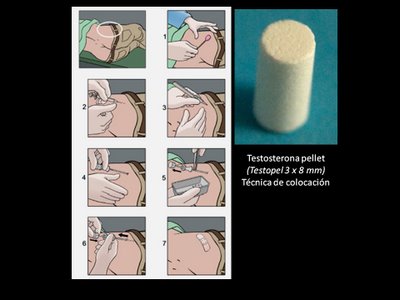
5. Subcutaneous pellets --> Long term pellets are even longer lasting but may require some skill in administering and may extrude from side.


Testopel® is one example of testosterone pellet


Warning: before you decide to give yourself a Testosterone Replacement Therapy (TST), you should first contact your physician.


Do not use any testosterone if you:


  • have breast cancer (rare in men).

  • have prostate cancer.

  • are a woman (especially if you are pregnant or breast-feeding). TST  may harm the babies of pregnant and breast-feeding women.

  • are allergic to testosterone.


Tell your doctor if you have or had:


  • problems urinating due to an enlarged prostate.

  • liver problems.

  • kidney problems.

  • heart problems.

  • lung problems.

  • diabetes.


Tell your doctor about all the medicines you take, including prescription and non- prescription medicines, vitamins, and herbal supplements.
PS: You may copy this post as long as you give link to this page, thanks.
-All picture is copyright to their respective owners-
-I'm not affiliated with nor endorsed by any product mentioned above-

(click the picture to enlarge)
From left to right
1. Prof. Dr. Nukman Moeloek, dr, SpAnd (Indonesia Senior Andrology Specialist)

2. dr Yuan Ade Sukma (myself)

3. Prof. Christina Wang, dr, PhD (President of ISA WHO, 2011)

4. Prof. Ronald S. Swerdloff, MD (UCLA)

5. Prof. Dr. KM Arsyad, DABK, SpAnd ( Chief of PERSANDI, 2011)